Attendance
Attendance is a fundamental pillar of education that influences academic success, personal growth and future opportunities.. We are committed to fostering child-centred actions and collective responsibility for attendance as an Inclusive Attendance school.
Our Multi Tiered System Support framework provides a comprehensive attendance intervention system that includes staff, children, parents, and external agencies, fully aligned with DfE guidelines.
- Tier 1: Universal support for all children.
- Tier 2: Early internal support and intervention.
- Tier 3: Intensive support for children and families requiring external agency assistance.

We promote a recognition-based model that acknowledges individual and collective achievements, fostering a positive environment and intrinsic motivation.
The school prioritises student welfare. Concerns regarding attendance are promptly investigated, and unexplained or prolonged absences trigger safeguarding procedures, including home visits and communication with agencies. The Attendance Policy is closely linked to other key policies such as Behaviour, Teaching and Learning, Safeguarding, Mental Health, SEND and Pupil Premium.
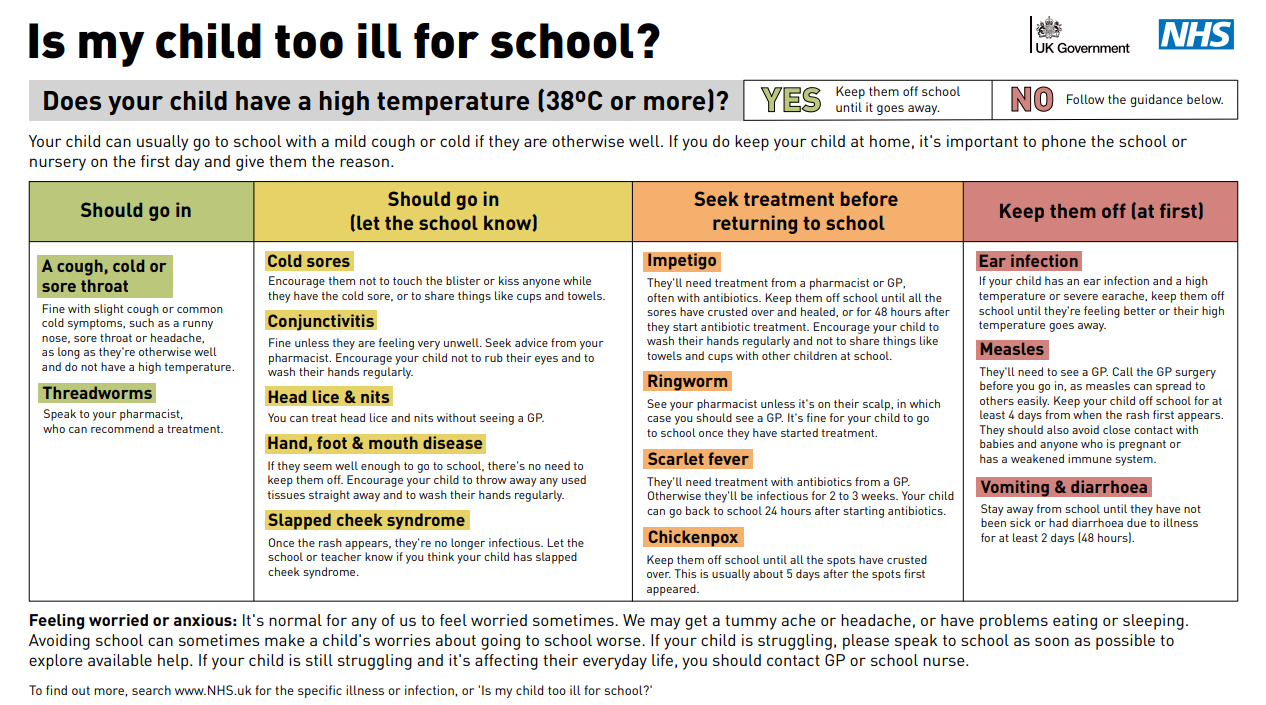
Is My Child Too Ill for School?
We understand that it can sometimes be difficult to decide whether your child is well enough to attend school.
The NHS has provided helpful guidance to support parents and carers in making this decision.
Children with mild coughs, colds or sore throats can usually attend school as long as they are otherwise feeling well and do not have a high temperature (38°C or above). However, some illnesses, such as chickenpox, vomiting and diarrhoea, require children to remain at home for a specific period to help prevent the spread of infection.
Please remember: If your child is too unwell to attend school, you must contact the school on the first day of absence and explain the reason.
We encourage all parents and carers to read the NHS guidance below, which explains when children should attend school, when they should stay at home and when medical advice may be needed.